by Glenn M. Travis, Principal, GMT Home Design
First in a series.
One of the great things about our job is that we drive and work all over New England, not just on the highways and city roads but more importantly in towns of all sizes. It adds to our appreciation of how stunning – and fascinating – our area really is.
Partly it's the natural surroundings of rolling hills, rocky coasts and sandy beaches, winding rivers, and hardwood forests. Partly it's the range of architecture, from crowded Boston/Hartford/Providence cityscapes to quieter, smaller towns with picket fences and stone walls, and our distinct mix of homes in styles from Capes, Colonials, and Saltboxes to modern farmhouses and many more.
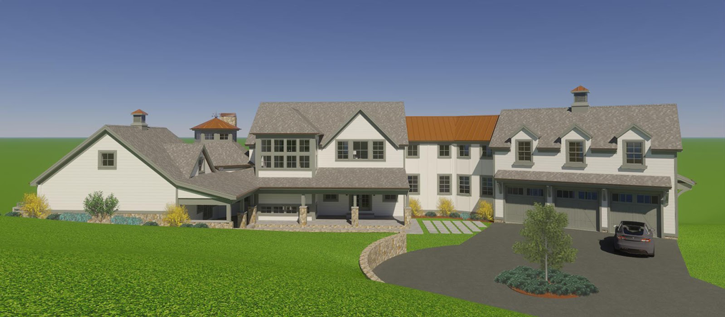
Rendering of a beautiful GMT-designed custom home now under construction in the Natick/Dover/Sherborn area, blending elements of classic architectural styles.
Previously on our blog, we've celebrated many of the local home styles. Now we're planning to spend some time diving into some of the unique New England towns around us! (The "Our Town" in Thornton Wilder's play, you probably know, is set in Grover's Corners, NH.)
GMT's primary offices are in Ashland, MA, and another time we'll go into depth about what makes our hometown so special. But we wanted to kick off this series of local posts just a little to our east....
Natick, Dover and Sherborn
If you follow along the Charles River from South Natick, you find an architectural tapestry defining this corner of Massachusetts. GMT has done numerous new construction and remodeling projects in this area. We love how these three towns showcase New England heritage blended with thoughtful modernization.
Natick: historic downtown, spacious farmland
The town of Natick balances three distinct areas: a historic downtown with preserved brick facades and a classic New England town common; the northern Route 9 commercial corridor including the Natick Mall (or Collection, or Mall again, depending on the year...) that we all know so well; and the quieter, more pastoral South Natick.
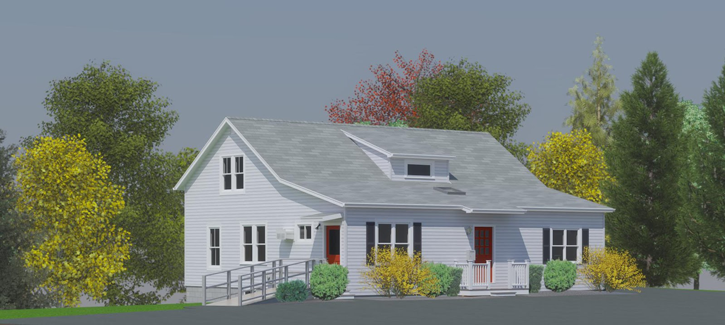
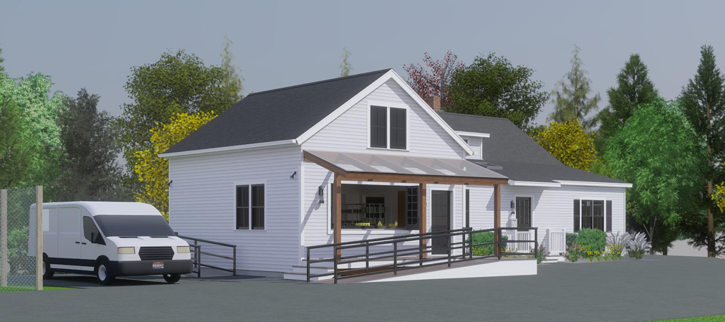
Before-and-after renderings show GMT's addition for A Place to Turn, the food pantry on Hartford St. in Natick. Our excellent build partner on this project was Coady Built.
Natick's super-walkable downtown is a quintessential New England town center that maintains historical integrity even as it has evolved. The town has done a really nice job of keeping the brick facades along Main Street, home to local businesses and upper-floor apartments. (Sweetwaters Cafe is one of our family favorites.)
Downtown Natick renovations have preserved 19th-century architectural details like ornate cornices and large display windows. We love the Common at the town's heart, framed by the Congregational Church's white steeple that has marked time for generations—it was built in 1876.
In South Natick, there are so many Colonial homes, with newer shingle-style and modern farmhouse homes sprinkled in. Together with the Charles River, we think this adds up to a village-like feeling even as the houses modernize and expand.
Like so much of Boston's western suburbs, land for new home construction can be hard to come by in Natick. So for many folks, remodeling has been the name of the game.
Natick housing: Did you know?
- Average home value was approximately $750,000 in 2024. That's up roughly 45% since 2015.
- The population is about 37,000 residents.
- The town has about 8,500 single-family homes, with apartments and multifamily
Dover: Elegant farmhouse styles, gradual modern updates
If you're driving out of Natick, as roads wind into Dover, the landscape opens even more. The dense village atmosphere gives way to Federal and Greek Revival farmhouses on expansive lots. These properties, with symmetrical facades and classic proportions, speak to Dover's agricultural history that persists despite today's development pressures. Beautiful barns and working stables also nod to the past.
Orchards' and farms' rolling fields provide breathing room that feels hard to find in the often-hectic Metrowest. The Town Hall, watching over the town center where Center St, Dedham St and Springdale Ave. flow together, was actually built relatively recently (well, 1921 is somewhat recent in New England) but captures a timeless feeling with its columns, chimneys, and majestic central tower.
Houses in Dover are more likely to be large single-family homes, often more expensive than in Natick, and rising even faster in value.
Dover housing: Did you know?
- Average home value was approximately $1.6 million in 2024, up about 60% since 2015.
- Dover's population is roughly 6,000.
- The town has approximately 2,000 homes.
- Dover-Sherborn regional high school has around 600 students in grades 9-12.
Sherborn: Saltboxes, Colonials and a relaxed 'town' feeling
Sherborn continues this rural character but with its own architectural signature. Here, Saltboxes and center-chimney Colonials cluster along winding roads that mirror the contours of the land. Farm stands remind us all of the town's heritage as a working landscape.
Recreational spots like Farm Pond, tucked away from busier roads, reinforce the sense of a tight-knit town.
There's no "downtown" Sherborn in the traditional sense, but the town center (where Routes 16 and 27 meet) includes the Town Hall, public library, community center, and of course what used to be the Sherborn Inn – originally a Federal-style private home built around 1760, now operating as Fireside Tavern Sherborn. It's been remodeled several times, but still features the kind of architecture that helps define Sherborn's solidity and charm.
Sherborn housing: Did you know?
- Average home value was approximately $1.3 million (2024), up about 55% since 2015
- Sherborn has roughly 4,300 residents and 1,400 homes.
The entire Natick, Dover, Sherborn area offers a wonderful mix of natural beauty along with convenient living. Home styles are as varied as their owners' tastes, but overall there's a strong tip of the cap towards New England tradition and our farmland heritage. We love this area.
Thinking of a new home build or home remodel in Natick, Dover or Sherborn? We're neighbors – let's talk today!