As much as half of the energy used in your home goes to heating and cooling. So making smart decisions about your home's heating, ventilating, and air conditioning (HVAC) system can have a big effect on your utility bills - and your comfort.
There are many things you can do yourself at home to increase efficiency but use a skilled contractor when necessary to ensure the safety and effectiveness of your improvements. Here are just a few items that can save you money right away this winter.
Change your air filter regularly
Check your filter every month, especially during heavy use months (winter and summer). If the filter looks dirty after a month, change it.
- At a minimum, change the filter every 3 months. A dirty filter will slow down air flow and make the system work harder to keep you warm or cool - wasting energy.
- A clean filter will also prevent dust and dirt from building up in the system - leading to expensive maintenance and/or early system failure.
Tune up your HVAC equipment yearly
Just as a tune-up for your car can improve your gas mileage, a yearly tune-up of your heating and cooling system can improve efficiency and comfort. Learn more: Maintain your Equipment: A Checklist
Install a programmable thermostat
A programmable thermostat is ideal for people who are away from home during set periods of time throughout the week. Through proper use of pre-programmed settings, a programmable thermostat can save you about $180 every year in energy costs.
Seal your heating and cooling ducts
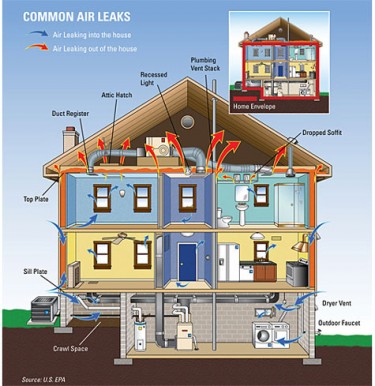
Ducts that move air to-and-from a forced air furnace, central air conditioner, or heat pump are often big energy wasters. Sealing and insulating ducts can improve the efficiency of your heating and cooling system by as much as 20 percent - and sometimes much more.
Focus first on sealing ducts that run through the attic, crawlspace, unheated basement, or garage. Use duct sealant (mastic) or metal-backed (foil) tape to seal the seams and connections of ducts. After sealing the ducts in those spaces, wrap them in insulation to keep them from getting hot in the summer or cold in the winter. Next, look to seal any other ducts that you can access in the heated or cooled part of the house. See Duct Sealing brochure (1.13MB) for more information.
Windows
During the winter months, replace your screens with storm windows to provide an extra barrier to the cold outside air. Caulk and weather-strip around windows and doors that leak air. If replacing windows, choose ENERGY STAR qualified models designed for your area, and save $150–500 per year in energy costs. With proper installation to ensure all gaps around them are sealed, ENERGY STAR qualified windows can help improve your comfort, cut drafts, and reduce fading of interior furnishings.
Learn how to fix problems with moisture on windows in your home.
Call us at GMT Home Designs at 508-881-7992 or contact us here…to learn more about a home energy audit, and improvements that can make a big impact on your energy costs.