Ceilings can go unnoticed, but they can also help define a space, add a touch of class, and make a room feel bigger. (Or cozier, when that's the goal.)
As you think about remodeling or building a new home, don't forget to look up and consider what's overhead! Here's a roundup of seven of the most popular kinds of ceiling, with some examples from GMT Home Designs projects in recent years.

Standard (or conventional) ceilings
Before we get to the fancier types, here are a few facts about the "standard" ceiling for indoor rooms:
- It's usually made with the same standard drywall material used in most walls.
- The standard ceiling height is 8 feet, defined in the National Building Code. However, we see an increasing number of houses nowadays go with 9- or 10-ft ceilings in some or all first-floor rooms. Conversely, some older New England homes have ceilings less than 8 feet high, which can create a cramped feeling.
- White is the most common color of choice, particularly in hallways, bathrooms or other areas that feel more spacious with a light color scheme up top.
- There are tons of ways to add texture to a standard ceiling, from the ever-present 'popcorn' style through knockdown, skip trowel, swirl, comb and other techniques. That means it's possible to give your standard ceilings different looks, without necessarily having to re-architect or renovate the framing. Still, most homeowners prefer to keep standard ceilings simple and timeless.
Standard ceilings are functional and comfortable. They may lack drama or visual interest, but that's exactly what people want for many areas in the home.
Vaulted, cathedral, and shed ceilings
Now, let's move on to a few styles that use extra height to add a dramatic visual appeal to a room.
Vaulted, cathedral, and shed ceilings have common traits, but the terms aren't technically the same.
A vaulted ceiling is any sort that slopes upward and goes higher than a typical flat ceiling. This comes in several different forms, including arches, barrel shapes, and domes, as well as simpler straight lines.
A cathedral ceiling is a specific type of vaulted ceiling that matches the roofline of the house.
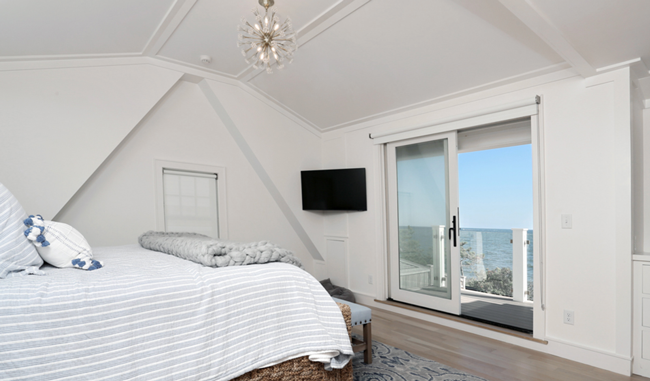
And a shed ceiling is a type of vaulted ceiling that slopes in only a single direction. This can achieve a fantastic effect when the higher side leads to a wall with lots of glass and a spectacular water view, for instance.
Tray and coffered ceilings
Here is another pair of ceiling types that share some common aspects.
A tray ceiling is most often a regular flat ceiling, except with one area raised above the rest of the room. Quite often this 'tray' is a recessed (i.e. higher) area in the center of the room, and mimics the room's shape – in other words, a square room will have a square ceiling tray.
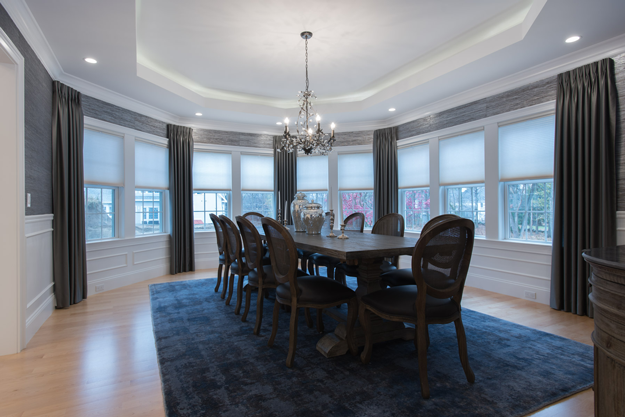
You might see this effect applied with a rectangular tray over a rectangular island in a new kitchen. It makes the whole room feel well-considered and harmonious.
Coffered ceilings are more complex, with multiple raised areas, usually creating a symmetrical "grid" look.
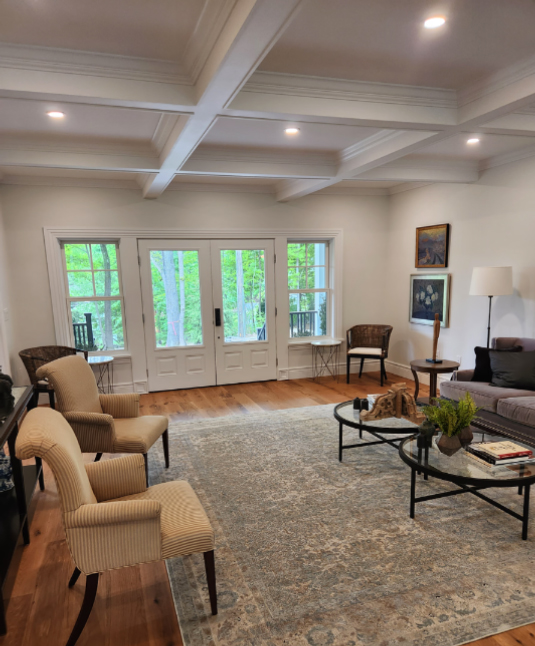
Coffered ceilings can be spectacular, when done well. In smaller rooms or ones with a lot of heavy furniture and/or drapery, on the other hand, coffers can contribute to a 'busy' or crowded feeling, and make the ceiling feel lower. (We can also add, from personal experience, that painting a coffered ceiling by hand can take a looong time.)
You can even mix together different styles of ceiling in a single room, as long as you have a team with the experience to make the elements blend together.
Beamed ceilings
One more way that New England homeowners love to make the ceiling more interesting is via exposed beams. Beams can look rustic or modern; either way, they tend to add a sense of scale and gravity to a room.
It's a natural in our region, where hardwood beams have been an essential element in homebuilding for centuries. Beamed ceilings can work well in almost any style of home, showing up frequently in Colonials, farmhouses, craftsman homes, Tudors, shingle-style homes, and barn renovations.
About the author: GMT Home Designs founder Glenn M. Travis has 30+ years' experience in architectural design, and a beautiful tray ceiling in his own New England dining room.
Ready for your dream home? The first step in any home construction, addition or remodeling project is a conversation. We're here!