Ever noticed a house with windows that seem a little "off" somehow?
Maybe too-small windows that make a big house look squinty and dark – or oddly spaced windows that seem kind of off-balance?
Let's talk about window design and placement — the architectural choices that make one house look carefully composed, while another looks like someone just punched random holes in walls.
Whether you're planning a renovation, designing an addition, or building custom, understanding how architects and designers think about window placement, proportion, and style can help you make decisions that elevate your project from generic to genuinely well-designed.
1. First off: Why are old New England windows divided into such small panes?
Basically, before modern manufacturing, making large sheets of glass was expensive and difficult. The solution was to use smaller panes held together by wooden bars.
Today, those small panes and wooden bars are purely decorative, but they're still a defining element in our region's architecture. The wooden bars create a different look depending on the "grid pattern" they're arranged in – different architectural styles (Colonial vs Cape vs Victorian, etc) feature different typical grid patterns.
Modern windows often have "simulated divided lites" where the grid is either applied to the surface of the window, or sandwiched between double-pane glass, which gives you the look without the maintenance nightmare of cleaning 18 individual panes.
2. Okay, explain grid patterns and "divided lites".
Divided lites is the architectural term for the section of a window or door that has multiple small panes of glass separated into a grid. You could describe a window with this feature as "a divided lite window."
(And to get even deeper into architectural design geekery, the individual bars in the grid are called "muntins" or "grilles". Who said windows aren't fun?)
The number, size, and position of these panes is quite variable, creating a lot of possible grid patterns in your windows.
3. What grid patterns are common in New England windows?
Since we've got quite a few different architectural styles in these parts, distinct grid patterns are common to different classic New England looks.
For example:
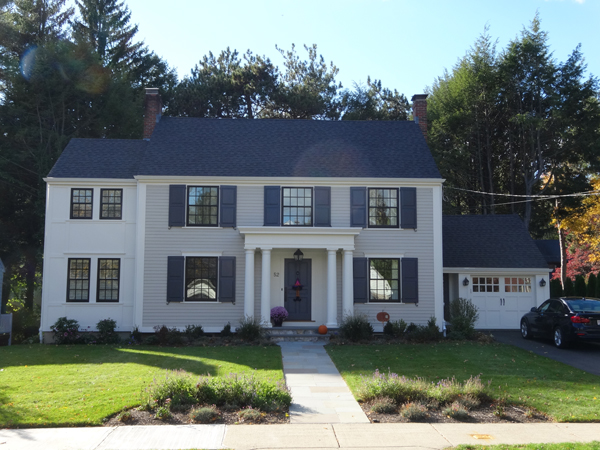
Colonial homes usually feature square or rectangular patterns. The "Colonial" grid pattern has a total of 12 equal-sized panes on a window (6x6). Another common Colonial pattern is the "six over one" (6x1) with six narrow panels on the top above a single panel on the bottom.
Tudor windows get a distinct look with those diagonal bars creating diamond-shaped panels, instead of horizontal squares.
Victorians love bay windows, often with more elaborate grid patterns. (More on bay windows later.)
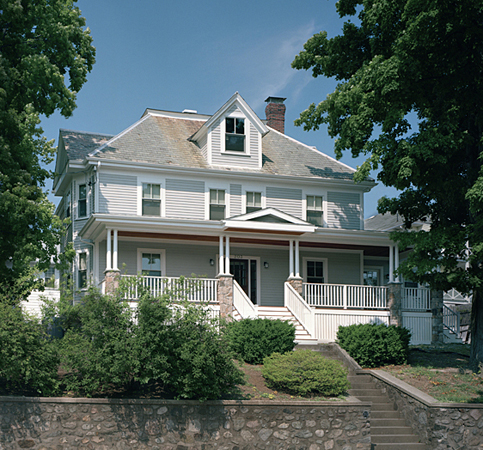
Craftsman or Bungalow windows sometimes offer a "prairie grid" of just a few bars around the outer edge, leaving the center mostly open. Another typical option in Craftsman and Bungalows is the "top row" or cottage grid, with bars only in the upper sash: sometimes 6x1 or 4x1 on older homes, and more often 3x1 or 2x1 in modern designs.
Of course, grid patterns aren't the only way to add design interest to windows.
For example: An older window arrangement you'll find locally is the Palladian window, aka Venetian or Serlian windows. This is not a grid pattern in a single window, but a three-part composition: a large arched center window flanked by two smaller rectangular windows. It's named after Andrea Palladio, a 16th century Venetian architect who popularized this style, and it's very common over entrance doors in the Federal Colonial and Georgian homes that are so numerous in our region.
4. Can I pick any grid pattern or architectural style I like for my house? Can I mix-and-match?
You could. But some designs just don't work well together. You want to make thoughtful decisions about the overall effect and the look of the house, not just pick based on liking a window. This is one way that you can end up with that "ooh, something about that house looks weird" effect we mentioned up top.
As just a couple of examples, right here in New England we've seen:
- 4x1 grid windows put in a Bungalow style home
- Prairie style windows placed a Colonial home
Neither looked great in the context of the home. These choices created a visual clash instead of visual harmony.
This isn't design snobbery; your brain is really good at detecting when something "feels off" in a home's appearance, even if you can't say why exactly. A bunch of Prairie grid windows on a Colonial home reads more like "someone doesn't understand this house" rather than "fun personal design adventure." It's kind of like seeing a Victorian-era oil painting that somehow includes a flat-screen TV or an iPhone. The technology didn't exist; it's weird. Your brain immediately tells you something isn't right.
At GMT, we certainly love thoughtfully blending elements of different home styles. You can see lots of examples in our portfolio! But the elements have to work together, and the choices have to make sense.
So, this is an advantage of working with an experienced architectural designer — to explore ideas and ensure these choices do work together.
5. What about using Bay windows or other types to add space?
Yes, a bay window projects outward from a room and can add space for a seating nook, make way for a large dining room table, or just bring in more light and a more spectacular view. The name comes from the architectural term "bay" as the space or recess between structural elements.
Another type of projecting window is the bow window, which uses multiple narrower panes to create an outward projection that's curved (like an archery bow). These are also called compass windows. Like Palladian windows, bow windows were popular in Georgian architecture in the 1700s in England, so you'll see a lot of them around New England as well.
Here's a variation you've seen, but might now know by name: the oriel window, which is a bay window that doesn't touch the ground, projecting from an upper story. These are more typical in crowded cities where it's harder to find space for a ground-floor bay window. The floating look of oriel windows was a bit of a status symbol. You'll find them in Tudor, Gothic Revival, and Queen Anne style homes.
And of course we've written a lot about dormers, which project out from a roof to create vertical space for windows, bringing light and functional space to cramped upper floors. Beyond that functional purpose, well-proportioned dormers can really add character to your home's exterior appeal.
If your dormers are big enough to fit larger window sizes, then divided lite windows matching the style and pattern elsewhere on the home can look great. Many dormers are smaller, though, and in that case, a busy grid pattern will end up looking like a prison window.
6. What about shutters? Necessary or contrived? Do they work with any style window?
Thanks to our colonial era design styles, window shutters are as "pure New England" as mudrooms and lobster rolls. That said, some people don't love the purely decorative vinyl shutters that seem to be added almost automatically to local homes.
Our thinking is along these lines: Shutters can lend a classical touch and visual interest. They aren't the only way to do that. In fact, in our designs we often rely on other elements to achieve the same goals, such as:
- well-considered relationships between different sections of the home (what's called "massing effects" in architecture)
- strong, well-balanced window trim and casements
- interesting and sometimes contrasting choices of siding (such as stone or brick sections, shingles, complementary color variations, etc)
- dormers, gables or other changes in the roof and roofline
Shutters tend to work better with classic grid patterned windows. They're also an easier fit with classic home styles (Colonials, Capes, and so on) rather than those that fundamentally lean toward simplicity (such as ranches and mid-century modern houses). A big, flat wall — think of the classic Colonial front wall — with fewer windows will benefit more from shutters than a home with a complex front.
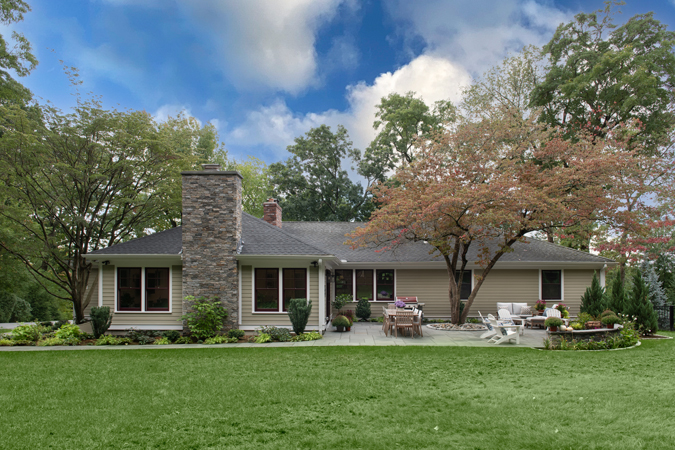
So: shutters aren't automatic. Like all window-related choices, they look great in the right context, and not-so-great in the wrong context.
Windows are one of those things where a little knowledge completely changes how you see every house you walk into. Now you'll notice why that Victorian down the street looks so good (proper proportions and complimentary grid patterns) or why your friend's new construction feels cheap (undersized windows with no trim detail).
Use that knowledge when you're thinking about the look of your new home or addition!
***
About the author: New Hampshire native Glenn M. Travis has more than 25 years' experience in home design.
GMT Home Designs has designed custom homes, additions and remodels across New England. Ready to let the light shine in? Reach out to us at info@gmthomedesigns.com.