Next in GMT's Our Towns series: A look at the architecture and design that makes the Lower Cape town of Harwich special—and what prospective first- or second-home buyers should know.
We've done more than a dozen home design projects on Cape Cod in recent years, from interior remodels to full waterfront custom homes. We could write happily about Brewster or Dennis on the Bay side (and we probably will), or oceanside towns from Hyannis to Yarmouth (and we probably will) — but let's start with a Lower Cape town that is distinct for so many reasons: Harwich.
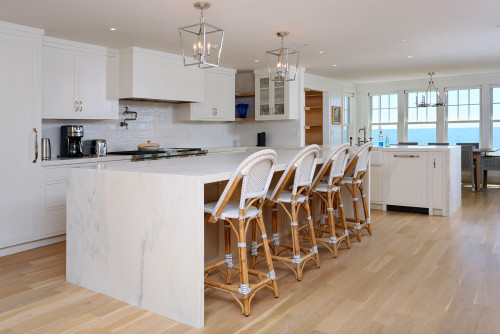
This GMT-designed whole house remodel showcases one of Harwich's great draws: Water views are seamlessly integrated into everyday living.
If you're a New Englander eyeing the Outer Cape or Lower Cape for a summer retreat, you've probably spent time in the usual suspects: Chatham's busy Main Street, Wellfleet's gallery district, Provincetown's never-dull waterfront. But have you given Harwich a serious look? This quietly appealing town—actually seven distinct villages—offers something different from its neighbors, and understanding what makes it tick can help you decide if it's the right fit for your Cape Cod dreams.
Here are seven questions about Harwich and its gorgeous, varied homes!
What's the most common architectural style in Harwich?
In terms of homes, the overall style here is classic Cape Cod. These are the homes that gave America the "Cape style" in the first place. There are certainly other types of homes here, but Capes are very common.
Cape style homes actually come in a few different flavors:
- the traditional half-Cape (asymmetrical, with the door on one side),
- three-quarter Cape (door off-center with two windows on one side, one on the other),
- and full Cape (centered door, two windows flanking on each side).
But the town's historic district accents all this shingled-home, sea-shelled driveway Cape flavor with a surprising concentration of Greek Revival and Italianate architecture from the mid-1800s. Walk through Harwich Center and you'll see why the entire village made it onto the National Register of Historic Places in 1975. Three buildings stand out to us:
The First Congregational Church anchors the town—built in 1832 in Greek Revival style, then dramatically changed in 1854 by the addition of a 100-foot Italianate spire that you can spot from every approach to the village. It's a reminder of the time when Harwich itself was transforming from plain-functional-meetinghouse style into something more and prosperous.
Brooks Academy, completed in December 1844, showcases Greek Revival style with Doric columns supporting the dramatic portico (covered entrance). It was first a seminary, then the local high school, and now fittingly it houses the Harwich Historical Society.
The town's Powder House, built in 1770 on the Brooks Academy grounds, was used during the American Revolution. It's one of 54 surviving powder houses in New England which speaks to Harwich's Revolutionary-era significance.
Between the church and the academy, Harwich Center contains what some consider "the most classically elegant architecture anywhere on the Cape"— that's hard to dispute when you stand in the village center. It's really terrific.
What's the oldest home in Harwich?
That's harder to answer than you'd expect. Despite the town's 1694 incorporation and settlement dating to 1670 as part of Yarmouth, there's no well-documented "oldest house" like you find in Plymouth or other Massachusetts towns. Not counting the Powder House, the oldest prominent structure is Brooks Academy from 1844, which makes it quite young for a town so old.
This absence likely reflects Cape Cod's harsh coastal environment and Harwich's early focus on fishing and maritime industries, rather than building lasting homesteads. Many 17th and early 18th-century structures simply didn't survive wind, salt, fires, and economic changes. What remains are primarily mid-19th century homes from Harwich's prosperous whaling and early cranberry-farming periods.
For buyers seeking a heritage property, this means you're unlikely to find a verified 17th-century home here. But you'll find plenty of 1800s properties with authentic period details and the low ceilings, wide-plank floors, and hand-hewn beams that give old New England houses their soul.
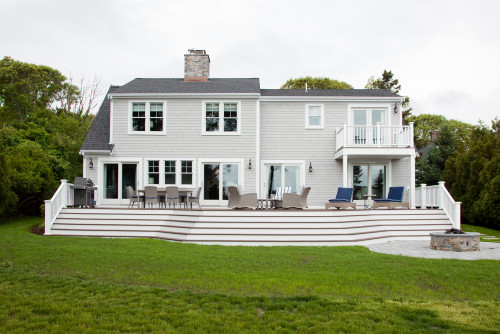
This beautiful renovation project included raising the house and adding a new garage with a mudroom, while converting the existing garage to a primary bedroom (and more). Indoor and outdoor living at its finest!
What's the summer versus winter population in Harwich?
Get ready for dramatic seasonal swings. Harwich had 13,440 year-round residents at the 2020 census, but with summer tourists and second-home owners, the population grows to roughly 37,000—nearly triple.
Only about half of Harwich's housing units are occupied year-round – whereas the average across the whole Cape is closer to two-thirds, and Harwich fits squarely in that pattern.
For second-home buyers, this can be good or bad depending on what you're looking for and when you want to stay here. Some services, restaurants, and shops are geared to summer populations. Port Summer Nights, the Wednesday evening music series in Harwich Port during July and August, are crowded. The annual Harwich Cranberry Festival fireworks in September mark the transition from summer bustle toward winter quiet.
How is Harwich distinct from surrounding towns? Why pick Harwich?
Harwich has an unusual town structure, with seven distinct villages:
- West Harwich
- North Harwich
- East Harwich
- South Harwich
- Harwich Center
- Harwich Port
- and Pleasant Lake
Each has its own character, which makes Harwich as a whole seem somewhat fragmented, compared to something like Chatham's cohesive downtown or Brewster's linear development along Route 6A.
Harwich Port: Country Living magazine ranked it among the nation's top 23 small town main streets—the only Cape Cod town to make that list, and Coastal Living declared it the second happiest seaside town in America. The village has locally-owned shops, boutique stores, good restaurants, and easy beach access, all within a strollable Main Street area. It's similar to Chatham but smaller and less touristy.
Harwich Center offers the stunning church and Brooks Academy around a proper New England village green. It's quieter than Harwich Port, more residential, and more about historical preservation than business.
Pleasant Lake is residential, sprinkled with cranberry bogs; West and South Harwich sit along Route 28 with more commercial development; East Harwich and North Harwich feel more suburban.
This multi-village structure means Harwich lacks the singular identity of a Chatham or Provincetown. You don't "go to Harwich" so much as you go to Harwich Port or Harwich Center. For buyers, this matters—your experience living in West Harwich along busy Route 28 will differ dramatically from life in Pleasant Lake surrounded by cranberry bogs.
So, compared to neighbors, Harwich occupies an interesting middle ground. It's more accessible and less expensive than Chatham, less spread-out and more village-focused than Brewster, and offers better walkability than Dennis. Many Cape Codders will tell you the "real Cape" starts when you cross the Bass River into the Lower Cape—that's where things get more laid back, with long beaches, classic Cape feel, and less commercial development. Harwich sits right at that threshold.
What about architectural permits and restrictions—can I renovate freely?
If you're buying in the Harwich Center Historic District, any construction, demolition, or alteration of buildings requires review and approval by the Historic District Commission before you even file for a building permit. This means exterior changes visible from public ways will be scrutinized—you can't just slap vinyl siding on a Greek Revival home or replace those original windows with modern units without permission.
The town also has specific overlay districts like West Harwich Special District, created to preserve historic and architectural resources while addressing development pressures along Route 28. If you're serious about a property, check which districts apply before you start sketching renovation dreams.
Outside of those historical areas, Harwich operates like most Cape towns with standard zoning, but less design oversight. You'll deal with typical dimensional requirements, setbacks, and use regulations, but you won't face a commission deciding whether your addition fits the historic character of the neighborhood.
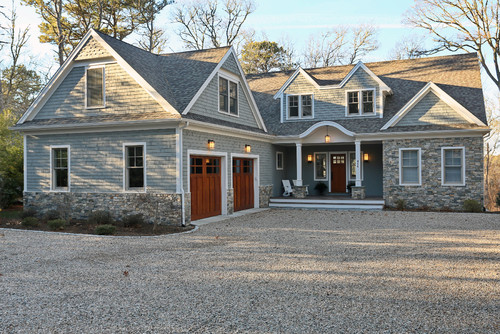
This cozy custom home was featured in Southern New England magazine. Luxurious modern space and function, and the details are “all Cape Cod".
What are Harwich beaches like?
Harwich has 18 (eighteen!) beaches and ponds spread across the seven villages. Bank Street Beach in Harwich Port is the most popular, with soft sand and Nantucket Sound swimming. It's a short walk from Main Street's shops and restaurants. Red River Beach in South Harwich is fun for shell collectors and sea glass hunters.
Harwich Port, South Harwich, and West Harwich offer sound-side beaches. Pleasant Lake and North Harwich provide freshwater pond swimming, including Sand Pond, a local favorite with calm water, a large public beach, and scenic views.
All beaches require parking stickers: $30 for residents, much more for visitors. If you need even more coastline, there's passenger ferry service from Harwich Port to Nantucket during summer.
All in all, you've got lots of different beach options here, no matter what vibe you're looking for on a given day.
How is the Cape Cod Rail Trail?
The Rail Trail, following the old Old Colony Railroad route, runs 25 miles through Dennis, Harwich, Chatham, Brewster, Orleans, Eastham, and Wellfleet. In Harwich, the trail passes through cranberry bogs and salt marshes, with the major rotary junction located in North Harwich near Main Street. The trail intersects Harwich Center behind the First Congregational Church, providing easy access for bikers, walkers, and runners. Summer mornings see a steady stream of families biking to beaches, retirees getting exercise, and visitors exploring the Lower Cape by bike rather than car. The trail connects Harwich to neighboring towns, so you can bike to Brewster's Nickerson State Park or Orleans' beaches without dealing with Route 6 or Route 28 traffic.
For second-home buyers, proximity to the Rail Trail might factor into your decision. Properties within biking distance offer a nice quality-of-life element, especially if you're trying to minimize car use during vacation weeks.
About the author: GMT home designs offers architectural design services in Harwich, MA and surrounding towns. GMT founder Glenn M. Travis has designed numerous custom homes, additions and renovations all over Cape Cod. Let's talk – reach out to us at info@gmthomedesigns.com.