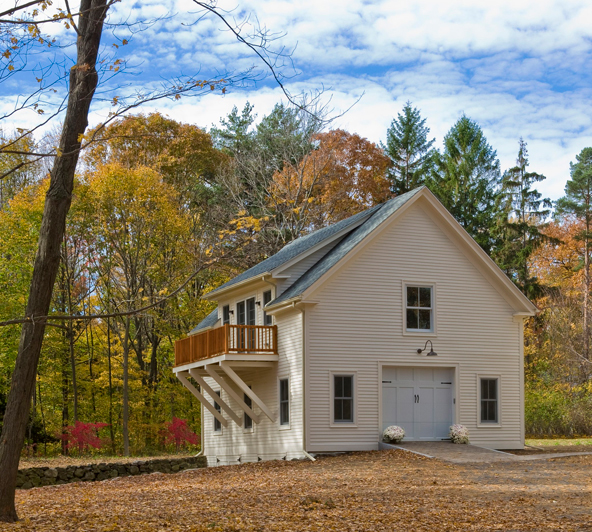
An accessory dwelling unit (ADU) adds a separate living space to your property – whether for aging relatives, young adults just joining the working world, or even for renters to create extra income for the homeowner.
This can take the form of
- a standalone, detached structure
- a new apartment-style dwelling attached to your primary residence (sometimes called an in-law apartment)
- or an independent living unit converted from existing space in the home.
From the very beginning of those basic choices, smart planning is your key to ADU success. With more than 30 years of residential architectural experience across New England, GMT Home Designs has guided homeowners through every stage of ADU design and permitting — from initial site feasibility to approved construction documents, for in-home “in-law” units to new detached ADUs to barn and garage conversions. We have the experience and creative vision to help you reach your goals.
Why ADUs start with smart design
For New England homeowners, it's not as simple as dropping a prefabricated ADU in your yard. An ADU starts with great design, from a harmonious look with the rest of the property, through a floor plan that meets real needs for the occupant, all the way to an approved plot plan.
For example, just in Massachusetts, as of 2025, a detached ADU:
- does not have to be owner occupied
- is limited to 900 sq ft or less or 50% of the size of the main dwelling – with certain exceptions by special permit
- requires a site plan review in some towns, but not others
- must meet state requirements related to setback, conservation, open space and more
Another set of requirements govern attached ADUs – covering fire separation, sound attenuation, electric wiring, septic and so on. And of course state and local laws are different from the Cape to Rhode Island to Maine and throughout New England.
We're ADU experts – so you don't have to be
You need an expert partner to stay on top of all the laws and requirements that matter for your location, from the start of the ADU project.
And that's our job. GMT's expert design and architecture team has specialized training and experience designing ADUs that look amazing, "live well," and avoid any speed bumps in the permitting and construction process.
We love finding creative solutions for New England's unique issues, whether it's
- converting a drafty post-and-beam barn
- complementing a primary residence's style – Colonial, Cape, Tudor, etc
- solving for setbacks, non-level lots, rocky soil and nor'easters
- or addressing whatever your specific needs are
Contact us today to discuss your ADU project, or to set up a site consultation to meet at your property to help you know the range of possibilities.